 |
Niloy Sikder did a bachelor in electronics and communication engineering and a master in computer science and engineering at Khulna University, Bangladesh. In his PhD at the Donders Sleep & Memory Lab and Rhein-Waal University of Applied Sciences, he investigates big sleep data with machine learning strategies, before moving on to a postdoc position at the Leibniz Institute for Materials Engineering in Bremen. |
|
 |
Jingyuan Ren did her psychology bachelor at Hainan Normal University and her psychology master at Capital Normal University before starting her PhD on the neurobiology of creativity at Capital Normal University, State Key Laboratory of Cognitive Neuroscience and Learning, and McGovern Institute for Brain Research, Beijing Normal University. At the Donders Sleep & Memory Lab, she investigated the neural mechanisms underlying superior memory skills. She then moved on to a postdoc position at the Max Planck Institute for Empirical Aesthetics in Frankfurt. |
| |
 |
Mariana de Carvalho Pereira did a bachelor in telecommunication engineering at Federal University of São João del-Rei, Brazil, with research stays in Birmingham and Chicago, working with MRI, REM sleep disorders, and Parkinson’s disease. During her masters in computational engineering at University of Campinas, Brazil, she investigated Alzheimer’s disease diagnosis using MRI and deep learning. In her PhD in the Sleep & Memory Lab she investigated the neurobiology of human REM sleep, before moving on to become a Project Officer at Delft University of Technology!. |
| |
 |
Sarah Schoch completed her bachelor in psychology, biology, and education, and her master in psychology at the University of Zurich. During her PhD at the University of Zurich and at the Salk Institute in San Diego, she investigated how sleep and gut microbiota develop in infancy. In her postdoctoral research in the Donders Sleep & Memory Lab, she investigated the association between dreaming and memory consolidation in a large-scale lab study. She then moved on to University Children’s Hospital Zurich. |
| |
 |
Elena Krugliakova did a bachelor and master in biology at Saint Petersburg State University. During her PhD and postdoc at University Children’s Hospital Zurich, and a postdoc at University Hospital Zurich she studied the influence of closed-loop auditory stimulation on NREM sleep in healthy participants and patients with Parkinson’s disease. At the Donders Sleep & Memory Lab, she investigated the potential of joint EEG-NIRS recording to study the glymphatic system activity during sleep, before moving on to a postoc position at Zurich University Hospital. |
| |
 |
Zehra Karakilic completed her bachelors in cognitive neuroscience at Tilburg University, and is currently pursuing her research master at Radboud University, specialising in Neuroscientific development & plasticity. She previously worked as a Research Assistant at Tilburg University and the Donders Institute on brain-immune interactions of cancer fatigue. As a RA at the Sleep & Memory Lab she was involved in combined EEG-MRI studies of REM sleep and lucid dreaming, before moving on to a project at Harvard University. |
| |
 |
Kitty Pohárová completed a full bachelor’s and master’s program in Slovakia, specializing in translation and interpreting before her bachelor in psychology at the Sigmund Freud Private University in Vienna. In her cognitive neuroscience master’s internship at the Donders Sleep & Memory Lab, she investigates large longitudinal sleep EEG data of Quantified Selfers. Her research interests center around neuroscience and cognitive psychology, exploring how sleep patterns can be optimized for mental health. |
| |
 |
Ramona van Oorschot did her bachelor biomedical sciences at the Radboud University and is now doing the corresponding master. Being interested in anything related to neuroscience and pychiatry, she currently focusses on lucid dreaming, alpha waves and the coffee machine downstairs. In her free time, she balances three associations and dozens of hobbies with being a semi-professional dogsitter. |
| |
 |
Selva Serin completed her bachelor in psychology at the University of Calicut, India, before starting a research master in cognitive neuroscience at Radboud University. She spend two years working with children with neurodevelopmental disorders and is now an intern at the Sleep and Memory lab. Her current research focuses on the brain’s glymphatic system, with a primary interest in understanding the role of sleep in neurodegenerative disorders. |
| |
 |
Samran Navid did a bachelor in computer engineering at National University of Computer and Emerging Sciences in Pakistan, a master in biomedical engineering at National University of Sciences and Technology, a PhD in clinical science and biomedicine at Aalborg University, and a postdoc at New Zealand College of Chiropractic. At the Donders Sleep & Memory Lab, he investigated sleep EEG in major depression before moving on to electrophysiological research in the industry sector. |
| |
 |
Mahdad Jafarzadeh Esfahani did a bachelor in electrical engineering at Islamic Azad University, Tehran, and a master in biomedical engineering, neural & motor systems at Twente University. For is PhD, he developed wearable sleep recording and enhancement technology, applying machine learning and different acoustic and visual cueing strategies. He then moved on to work as a Scientific Software Engineer. |
| |
 |
Leila Salvesen did a bachelor in psychology at the University of Montpellier and a master in neuropsychology at the Free University of Brussels. In her PhD at IMT School for Advanced Studies, Lucca, in collaboration with the Donders Sleep & Memory Lab, she investigated different kinds of sensory stimulation of dream content. She then moved on to a postdoc position at Vrije Universiteit Amsterdam. |
| |
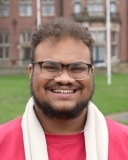 |
Sicelo Jones did a bachelor of biomedical health science and an honors degree in neuroscience at the University of the Witwatersrand in Johannesburg, South Africa, before starting a biomedical science master with a specialization in neuroscience at Radboud University. In the Sleep and Memory Lab, he performed fMRI studies aimed at understanding the complexities of lucid dreaming, and further investigated the association between sleep and depression. |
| |
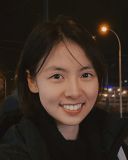 |
April Zhao got a combined bachelor degree in psychology, medicine, and applied linguistics from Peking University, Beijing, before starting a research master in cognitive neuroscience at Radboud University. As an intern at the Sleep & Memory Lab she was interested in the neural representation of dreams and generally in ‘translating’ the language of our brain. Afterwards she moved on to the University of Munich for a PhD on sleep and memory. |
| |
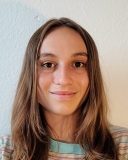 |
Lisa Hazebroucq did a psychology bachelor in Grenoble and a neuroscience master in Bordeaux before starting the cognitive neuroscience master program at Radboud University. Her research interests lie in the realm of memory, with a specific focus on understanding the processing of emotional memories, especially within the context of REM sleep. |
| |
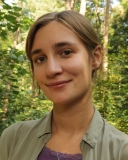 |
Victoria Libucha did a bachelor in physics at the University of Galway, Ireland, before her master in neurophysics at Radboud University. In the Sleep & Memory Lab, she worked on the induction of lucid dreaming with wearable devices. She is passionate about science, art, and nature and will channel that focus into a better understanding of the process of dreaming and REM sleep. |
| |
 |
Famke Roest did a bachelor and master degree in medical biology at Radboud University, working on topics from 3D-Polarized Light Imaging of human brain tissue to lucid dream induction via sensory cueing. After finishing her master, she joined the Sleep & Memory Lab again as a research assistant to work on different studies on the cognitive neuroscience of dreaming. |
| |
 |
Lucija Blaževski did a bachelor in psychology at the University of Zagreb and a research master in psychology at the University of Amsterdam. Her main research interests lie in (sleep) consciousness and intrusions of sleep-like activity in a wakeful brain. As a research assistant at the Sleep and Memory Lab, she worked on the neuroimaging of REM sleep.
|
| |
 |
Selin Yavuzcan did her bachelor’s degree in psychology at the University of Texas at Dallas, working on face perception and the other race effect in algorithms and forensic examiners. She is now at Radboud pursuing a research master’s in behavioral science. Her research interests lie in lucid dreaming and clinical psychology. She joined the lab as a research assistant and worked on different studies involving dreaming and neuroimaging. |
| |
 |
Seungwon Nam did a bachelor in philosophy and psychology at Hallym University in Chuncheon, South Korea, before starting her master in cognitive science at Osnabrück University. Her interest in the intersection of neuroscience and philosophy of dreams – exploring their sources, creation, and underlying principles, both theoretically and empirically – brought her as a research assistant to the Donders Sleep & Memory Lab. She is eager to explore the applications of dream technologies, such as dream content modulation through brain stimulation or dream recording/decoding. |
| |
 |
Yibran Pacheco Saez did a psychology bachelor in Granada and Oslo before starting the cognitive neuroscience master program at Radboud University. As a research assistant in the Sleep & Memory Lab, he works on neuroimaging and neurostimulation studies on dreaming. He is interested in theoretical neuroscience, philosophy of mind, and philosophy of science and loves to play ultimate frisbee, volleyball, and guitar. |
| |
 |
Emma Peters did a bachelor in biology and a master in cognitive neuroscience at Radboud University. Her favorite things are hallucinations and paranormal experiences seen from a neuroscientific viewpoint. In the Sleep & Memory Lab, she worked on lucid dreaming topics and large sleep data sets. In her PhD at Bern University, she investigates dream cognition from an embodied perspective. |
| |
 |
Tinke van Buijtene did a bachelor in artificial intelligence at Rijksuniversiteit Groningen and a master in cognitive neuroscience at Radboud University, specializing in neural computing and neurotechnology. She joined the Sleep & Memory Lab as a research assistant to help out with investigation of wearable EEG technology, and then moved on to Universitat Pompeu Fabra in Barcelona for a PhD on the effects of music on sleep. |
| |
 |
Erieta Bountouva did a bachelor in neuroscience and psychology at the University of Glasgow before starting her research master on cognitive neuroscience at Radboud University. In her internship at the Sleep & Memory Lab she investigated the cognitive neuroscience of REM sleep with combined fMRI/EEG. Beyond science, she loves traveling, reading books and yoga. |
| |
 |
Stella Lentzou completed her bachelor in neuroscience at Middlebury College, USA, while researching spatial memory in rodents. She then investigated intracranial human working memory as a research assistant at NYU Abu Dhabi for 3 years, before starting a cognitive neuroscience master at Radboud University. At the Donder’s Sleep and Memory Lab, she focused on memory consolidation during sleep. In her free time, she enjoys doing various crafts and diys. |
| |
 |
Frederik Weber is the creator and lead developer of the SpiSOP sleep analysis toolbox. Originally trained in bioinformatics, he performed his PhD research on the association between sleep and memory processes at the University of Tübingen. In the Sleep & Memory Lab, Freddy will integrate SpiSOP into the FieldTrip environment – the product obviously to be dubbed as SleepTrip – and apply it on big sleep data. |
| |
 |
Nils Müller originally studied mathematics, philosophy and education in Göttingen to become a school teacher. His interest in the mechanisms underlying learning success brought him to Nijmegen for a second master’s in cognitive neuroscience. During his PhD, he investigated how prior knowledge enhances the acquisition of new but related information. In the Donders Sleep & Memory Lab, he is involved in neuroimaging studies of sleep and memory. |
| |
 |
Juan Bernabe Nakagawa did a bachelor in mechanical engineering at the University of Minnesota before starting a master in psychology at the Pontifical Catholic University of Peru. At the Donders Sleep & Memory Lab, he investigates brain-heart interplay and frontal sleep EEG asymmetry in patients with depression. Beyond research, the two things he could not live without are English football and writing. |
| |
 |
Demetrius Ribeiro de Paula collects degrees of higher education, holding a master in physics from the Federal University of Ceará, Brazil; a master in project management from the University of Fortaleza, Brazil; and a master in medical physics from Western University, Canada. In addition to his PhD project on fMRI and EEG methods, he is CEO of Brainet, a company developing diagnostic neuroimaging tools. Besides being a free software enthusiast for many years, he likes yoga, running, swimming and biking. |
| |
 |
Marieke McKenna did a bachelor in philosophy at the University of Amsterdam and is currently finalising her master in history and philosophy of science at Utrecht University. At the Donders Sleep & Memory Lab in collaboration with the Max Planck Institute for the History of Science, she works as a research assistant on an interdisciplinary project on the history of lucid dreaming research. Besides science and philosophy, Marieke has a passion for art, music and literature. |
| |
 |
Tatiana Almazova did a bachelor in philosophy at the Higher School of Economics in Moscow before starting her master in cognitive science at the University of Osnabrück, specializing in neuroscience and artificial intelligence. After contributing her skills in polysomnographic analyses to Osnabrück Sleep Center and Karlsruhe Institute of Technology, she joined the Donders Sleep & Memory Lab to work on big sleep data studies. |
| |
 |
Çağatay Demirel did a bachelor in computer science and engineering at Marmara University, Istanbul, and at Budapest University of Technology and Economics, and a master in computer science and engineering at Istanbul Technical University. After some time as a machine learning engineer in the industry, he joined the Donders Sleep & Memory Lab for his PhD on BCI and machine learning applications on sleep and dreaming. |
| |
 |
Teresa Campillo Ferrer did a bachelor in biological sciences and a master in neuroscience at Complutense University of Madrid, with a research project at the Cajal Institute on the role of estradiol-prolactin interaction in hippocampal synaptic plasticity. In her PhD at Ruhr University Bochum in collaboration with the Donders Sleep & Memory Lab she investigates the neurobiology of non-waking states of consciousness. |
| |
 |
Jarrod Gott did a master in neuroscience at Swinburne University, Melbourne, investigating the neural and behavioral correlates of mental imagery. Jarrod is focused on modeling the relationship between phenomenal perception, electrophysiological activity and agent control; particularly regarding aberrant metacognitive states. Outside scientific and philosophical research, he enjoys building electronics, hiking, mountain biking and free-diving. |
| |
 |
Marc Schwartz studied nanotechnology at the Autonomous University of Barcelona, and after a research stay at the Bernstein Center for Computational Neuroscience Berlin obtained a master in brain and cognition at Pompeu Fabra University. For his PhD at Pompeu Fabra University and at his research visit at the Donders Sleep & Memory Lab, he investigates computational principles behind temporal processing of auditory stimuli and how these are modulated over decreasing arousal states including sleep. |
| |
 |
Yon Keuren did a bachelor of biomedical sciences at Maastricht University before starting his master in biomedical sciences at Radboud University. In his master internship at the Donders Sleep & Memory Lab, he investigated wearable sleep EEG technology, and now continues to do so as a research assistant. |
| |
 |
Laura Stalenhoef did a bachelor in psychology at Tilburg University with an Erasmus semester at Münster University. Next to her bachelor, she participated in the excellence program of the Tilburg School of Behavioral Science, before starting her master in cognitive neuroscience at Radboud University. For her master project and as research assistant in the Donders Sleep & Memory Lab, she investigated big sleep EEG datasets. |
| |
 |
Leonie Kooloos did a bachelor in biology and an educative module at Utrecht University before starting her master in medical biology at Radboud University, specializing in neurobiology and science in society. In parallel, she worked as a biology teacher. At the Donders Sleep & Memory Lab, she investigated the role of dreaming in memory consolidation. |
| |
 |
Maarten van Hal has been working as a neurodiagnostic technician in clinical neurophysiology for many years. Besides contributing his somnological expertise to the Sleep and Memory Lab, he is working as a somnologist technician for SEIN Zwolle and runs a company http://www.ikwilslapen.nu providing PSG analysis, PSG education and special training courses in the field of somnology. In 2020 he started to study Depth Psychology at the Jungiaans Institute in Nijmegen. |
| |
 |
Uğur Can Akkaya did a bachelor in mechanical engineering at Istanbul Beykent University, with a research stays at Białystok Technical University, Poland, and a master in Sonic Arts at Istanbul Technical University. In his PhD at Technical University Dresden and during his guest stay at the Donders Sleep & Memory Lab, he investigated the association between sleep and music. |
| |
 |
Carmen Heuvelmans did a bachelor in product design at Nuova Accademia di Belle Arti (NABA) in Milan, with a research stay at the Pratt Institute in New York City. She then switched to a pre-master in cognitive science and artificial intelligence at Tilburg University, before starting her master in cognitive neuroscience at Radboud University. In the Sleep & Memory Lab, she investigated sleep EEG wearables and explored designs for additional applications. |
| |
 |
Eni Simó did a bachelor in business administration at Corvinus University, Budapest, with a research stay at Sapienza University, Rome, and a master in international economics at Corvinus University. After research assistantships on the psychology of pain in Rome and on sleep research topics in Cardiff, she joined the Donders Sleep & Memory Lab to investigate wearable sleep EEG. |
| |
 |
Mathijs van Bakel did a bachelor in health sciences at Maastricht University with a minor in sport, health and movement at Vrije Universiteit Amsterdam, and a master in human movement sciences at Maastricht University, before starting his second master in biomedical sciences at Radboud University. In the Donders Sleep & Memory Lab he investigated the association between sleep, nutrition and exercise. |
| |
 |
Zsófia Zavecz did a bachelor and a master in psychology at Eötvös Loránd University, Budapest. In her PhD at Eötvös Loránd University and at the Donders Institute, she worked on different projects investigating the role of sleep for memory consolidation. For her postdoc, she moved on to Matt Walker’s lab at Berkeley University to investigate the role of sleep in Alzheimer’s disease. |
| |
 |
Olivia Brunet studied bioinformatics at the Institut National des Sciences Appliquées de Lyon (INSA) and at the University of Leuven, before starting her master in cognitive science at Lumière University Lyon 2. In her master project at the Donders Sleep & Memory Lab, she investigated strategies to communicate with lucid dreamers, using brain computer interfaces and other techniques. |
| |
 |
Hong-Viet Ngo was trained in theoretical physics and computer science in Kiel before his PhD in cognitive neuroscience at the Universities of Lübeck and Tübingen. After a research stay at the Korea Institute of Science and Technology, Seoul, he performed postdoctoral research at the University of Birmingham. In the Sleep & Memory Lab, he investigated acoustic closed-loop stimulation of sleep slow waves, before moving on to the University of Lübeck. |
| |
 |
Mariska van Pouderoijen did a bachelor in applied biology at HAS University of Applied Sciences ‘s-Hertogenbosch before her master in medical biology at Radboud University. In an industry research project at Philips, co-supervised by the Donders Sleep & Memory Lab, she tested sleep modulating wearables. She then moved on to a PhD project on personalized eHealth interventions at the Donders Institute and Maastricht University. |
| |
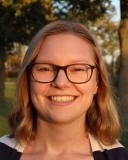 |
Amber van der Stam did a bachelor in biology before starting her master in medical biology with a specialisation in neurobiology at Radboud University. Her interest in sleep research led her to do her internship at the Donders Sleep & Memory Lab where she validated sleep EEG wearables with full polysomnography. She then moved on to further sleep research projects at the Karolinska Institute and at Radboudumc. |
| |
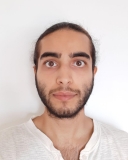 |
Shervin Bukhari did a bachelor in consciousness studies at the University of Skövde, Sweden, before starting a master in cognitive neuroscience at Radboud University. His interest in interdisciplinary research on consciousness, altered states and philosophy of mind led him to a master project on lucid dreaming in the Sleep & Memory Lab. He then moved on to further sleep projects at Uppsala University. |
| |
 |
Soha Farboud did a bachelor in biology before starting a master in neurobiology at Radboud University. She worked as an intern at the Hospital of San Raffaele in Milan and the Max Planck Institute of Psycholinguistics. In the Sleep & Memory Lab, she investigated the role of sleep in emotion and memory. She then moved on to a PhD project on transcranial focused ultrasound stimulation at the Donders Institute. |
| |
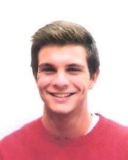 |
Pedro Reis Oliveira did a bachelor in psychological science at the Instituto Universitário de Ciências Psicológicas, Sociais e da Vida (ISPA) in Lisbon and the University of Pécs, before starting a joint master program in cognitive and behavioral neurosciences at the ISPA and at the Catholic University of Portugal in Lisbon. At the Donders Sleep & Memory Lab, he investigates strategies to induce lucid dreaming. |
| |
 |
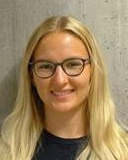
Rute Sequeira started her academic path with a bachelor’s in biology at University of Aveiro, before pursuing a research master’s in cognitive and clinical neuroscience, specialisation in cognitive neuroscience, at Maastricht University. She joined Donders Sleep & Memory Lab as part of her master’s internship, investigating dynamic interaction between hormones and sleep. |
| |
 |
Jasmin Keller did a biomedicine master at Uppsala University, Sweden. After working on a metabolic sleep study in the neuroscience department, she joined the Sleep & Memory Lab for a dense longitudinal multimodal phenotypingproject, including hundreds of sleep recordings and dozens of MRI scans. She then moved on to Leiden University for her PhD project on EEG biomarkers of autism. |
| |
 |
Anastasia Mangiaruga did a bachelor in psychological sciences and a master in cognitive neuroscience at Sapienza University of Rome. In her PhD at Sapienza University, she studied the link between sleep, dreams and cognitive functioning, particularly focusing on parasomnias and bizarre sleep phenomena. During her postdoc at the Donders Sleep & Memory lab, she investigated lucid dreaming induction strategies, before moving on to a research position at the University of Bologna. |
| |
 |
Marike Hoegen did a bachelor in biology at Wageningen University. Alongside her cognitive neuroscience master in Nijmegen, she did a second master degree in health and disease at Wageningen University. In the Sleep & Memory Lab she investigated the role of sleep in major depression, before starting her PhD on neuroimaging of neuromuscular disorders at Leiden University. |
| |
 |
Elise McGlashan completed a PhD in Psychology in the Sleep and Circadian Medicine Laboratory at Monash University in Melbourne, Australia. Her research investigates the relationship between light, circadian rhythms and depression. In particular she is interested in identifying markers of risk for depression, and of antidepressant treatment responses – topics she also worked on during her research stay in the Donders Sleep and Memory Lab. |
| |
 |
Sebastian Idesis has a degree in psychology from the University of Buenos Aires. After positions as assistant lecturer and research assistant, he joined the Sleep & Memory Lab for a project on dense longitudinal multimodal phenotyping of a single subject, including hundreds of sleep recordings and dozens of MRI scans. For his PhD project on structural connectomics, he moved on to Pompeu Fabra University in Barcelona. |
| |
 |
Ashley Shih did a bachelor of life science at National Chung-Hsing University and a master of neuroscience at National Yang-Ming University, Taiwan. In her master of medical biology at Radboud University, she is focusing on science management and innovation. After her master project on minimal sleep EEG headbands, she moved on to work in a start-up in the biomedical field. |
| |
 |
Charlotte Fraza did a bachelor in theoretical physics in Utrecht, a minor in Korean language and culture in Seoul, and a master in computer science and ‘color in science and industry’ at universities in France, Spain, Finland, Japan. For her cognitive neuroscience master, in the Sleep & Memory Lab she investigated the neural mechanisms of mnemonic strategies. She then moved on to a PhD bridging machine learning and psychiatry at the Donders Institute. |
| |
 |
Oliver Stange investigated neurodegenerative diseases during his bachelor’s in Furtwangen and Gothenburg. After a stint at the German Center for Neurodegenerative Diseases, Tübingen, he started with his master in molecular life sciences at Radboud University. In the Sleep & Memory Lab, he investigated the association between sleep and blood plasma dynamics, before moving on to his PhD at University Medical Center Hamburg-Eppendorf. |
| |
|
Famke Roest did a bachelor’s degree in medical biology with a research project on 3D-Polarized Light Imaging on human brain tissue at Radboud University. During her master’s studies in medical biology she focused on cognitive neuropsychology topics and the neural basis of psychiatric disorders. In the Sleep & Memory Lab, she explored how visual/acoustic cueing procedures can modulate dream experiences, before moving on with her master studies. |
| |
 |
Diede Booltink studied applied science at Fontys University Eindhoven and is now working on her master’s degree in medical biology with the specialization of neuroscience. In the Sleep & Memory Lab she investigated lucid dreaming induction strategies, before moving on to a teaching position at Radboud University Medical Center. |
| |
 |
Rathiga Varatheeswaran has been involved in several projects in the Sleep & Memory Lab as a master intern and research assistant working with fMRI, TMS, polysomnography and novel sleep recording techniques with a focus on depression. She then moved on to her PhD project on emotional memory processing at the German Resilience Center Mainz, targeting deep brain structures with concurrent TMS-fMRI and -EEG. |
| |
 |
Julia Pottkämper did a bachelor’s degree in psychology and a master’s degree in clinical psychology before starting a research master in cognitive neuroscience. In the Donders Sleep & Memory Lab she investigated the role of the mPFC and sleep for emotional memory bias. She now works on a PhD project on depression and epilepsy at the University of Twente. |
| |
 |
Marios Diamantopoulos finished his neuroscience master at the University of Edinburgh after his studies of medicine at the University of Athens. Intrigued by neural networks and the role of sleep/dreaming in cognition, he aims to integrate neuroscientific research into psychiatry. In the Sleep & Memory lab, he investigated emotional memory, before moving on to Pompeu Fabra University in Barcelona. |
| |
 |
Stefanos Loizou studied human biology at the University of Nicosia/Cyprus and the University of South Wales before graduating from his master’s in medical biology at Radboud University. In the Donders Sleep & Memory Lab, he worked on the role of sleep for emotional memory bias, and could occasionally be spotted by the coffee machine day dreaming about an animal model for this topic. For his PhD he moved on to the University of Utah. |
| |
 |
Elisa Lancini studied clinical psychology at the University of Padua. In her master project in the Donders Sleep & Memory Lab, she analyzed the association between sleep and amyloid-beta dynamics. She then moved on to the German Centre for Neurodegenerative Diseases in Magdeburg for a PhD project on the role of dopamine and noradrenaline in age-related memory decline. |
| |
 |
Danielle Tump did a dual master’s degree in artificial intelligence and cognitive neuroscience. When not organizing parabolic flights with the European Space Agency or tinkering with brain-computer interfaces, she analyzed sleep EEG signatures of vestibular replay of radically new experiences, namely zero gravity. She now works at the Donders spinoff MindAffect, further developing BCI setups with a particular focus on application in ALS and Locked-In patients. |
| |
 |
Alessandro Orticoni was trained in clinical engineering and biomedical engineering at the University La Sapienza in Rome, followed by a research stay at the EPFL in Lausanne. In the Donders Sleep & Memory Lab he worked on his master’s project on the neural correlated of lucid dreaming training. Afterwards he moved on to a research position at San Raffaele University of Rome. |
| |
 |
Carmen van Hooijdonk studied cognitive neuropsychology at the Free University Amsterdam. During her master project in the Donders Sleep & Memory Lab, she investigated the association between mood and lucid dreaming. She then moved on to Leiden and Amsterdam for a PhD project on the neurochemistry of treatment-resistant schizophrenia using PET and MRI. |
| |
 |
Simon Kern did a bachelor in cognitive science at Osnabrück University investigating pharmacological induction of lucid dreaming, and a master in artificial intelligence at Radboud University. For his master project in the Sleep & Memory Lab, he developed an automatic sleep scoring algorithm using convolutional neural networks. He moved on to work on very similar topics in a start-up, developing analysis algorithms for sleep EEG headbands. |
| |
 |
Thomas Houweling did a bachelor’s degree in social and organizational psychology at the University of Padua, a master’s degree in clinical neuropsychology at Leiden University, and a further master’s in cognitive neuroscience back at the University of Padua. In the Donders Sleep & Memory Lab he investigated lucid dreaming and lunar cycle effects on sleep. He now works on his PhD in neurolinguistics at the University of Zurich. |
| |
 |
Isabella Wagner did a master’s degree in psychology and worked as research assistant on brain-computer interface projects in Graz and Albany before her PhD at the Donders Institute. As a postdoc in the Sleep & Memory Lab, she investigated how mnemonic experts encode, consolidate and retrieve long-lasting memories with ease. She now works on social neuroscience topics at the University of Vienna. |
| |

 Donders Sleep & Memory Lab | Martin Dresler